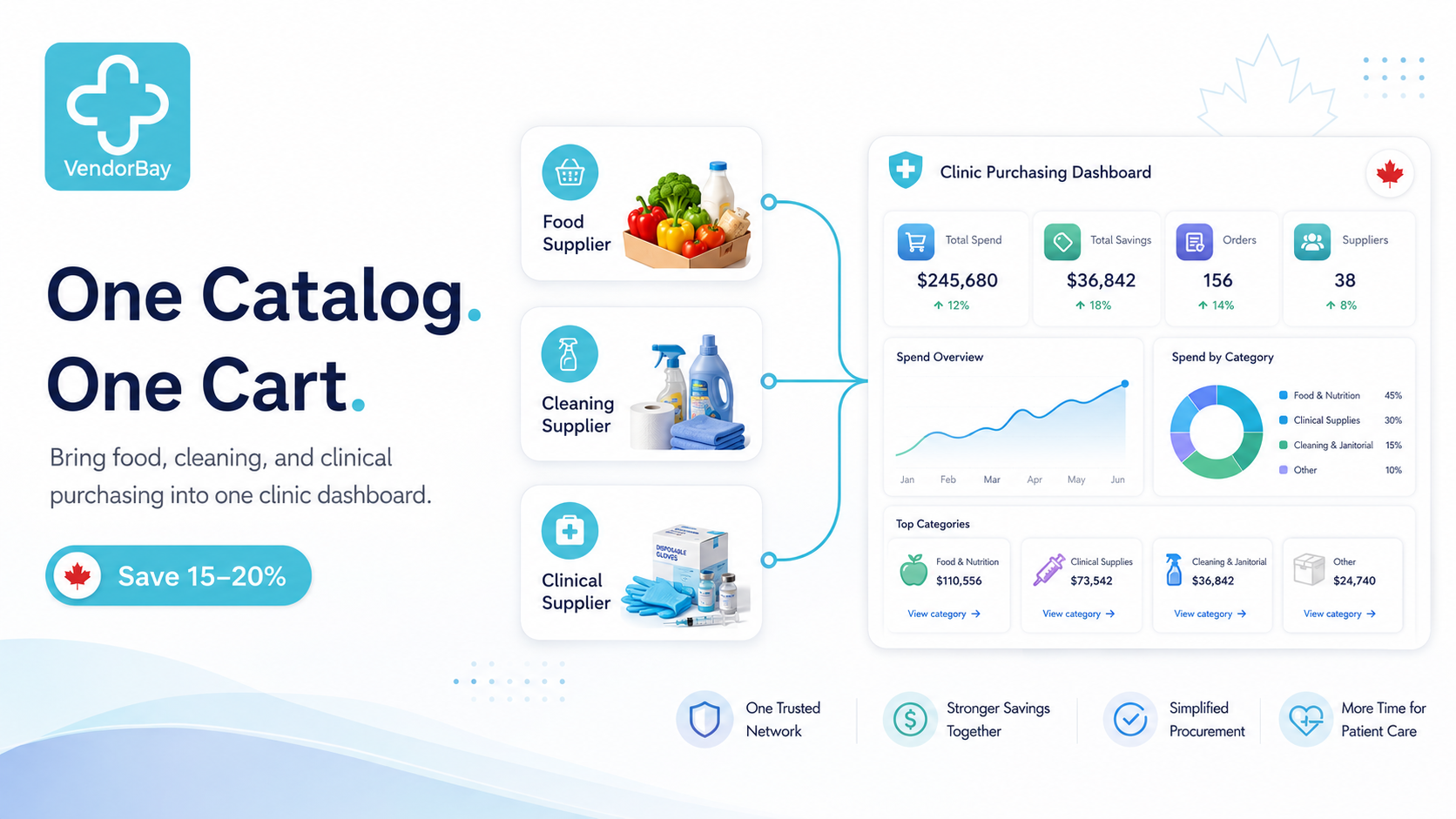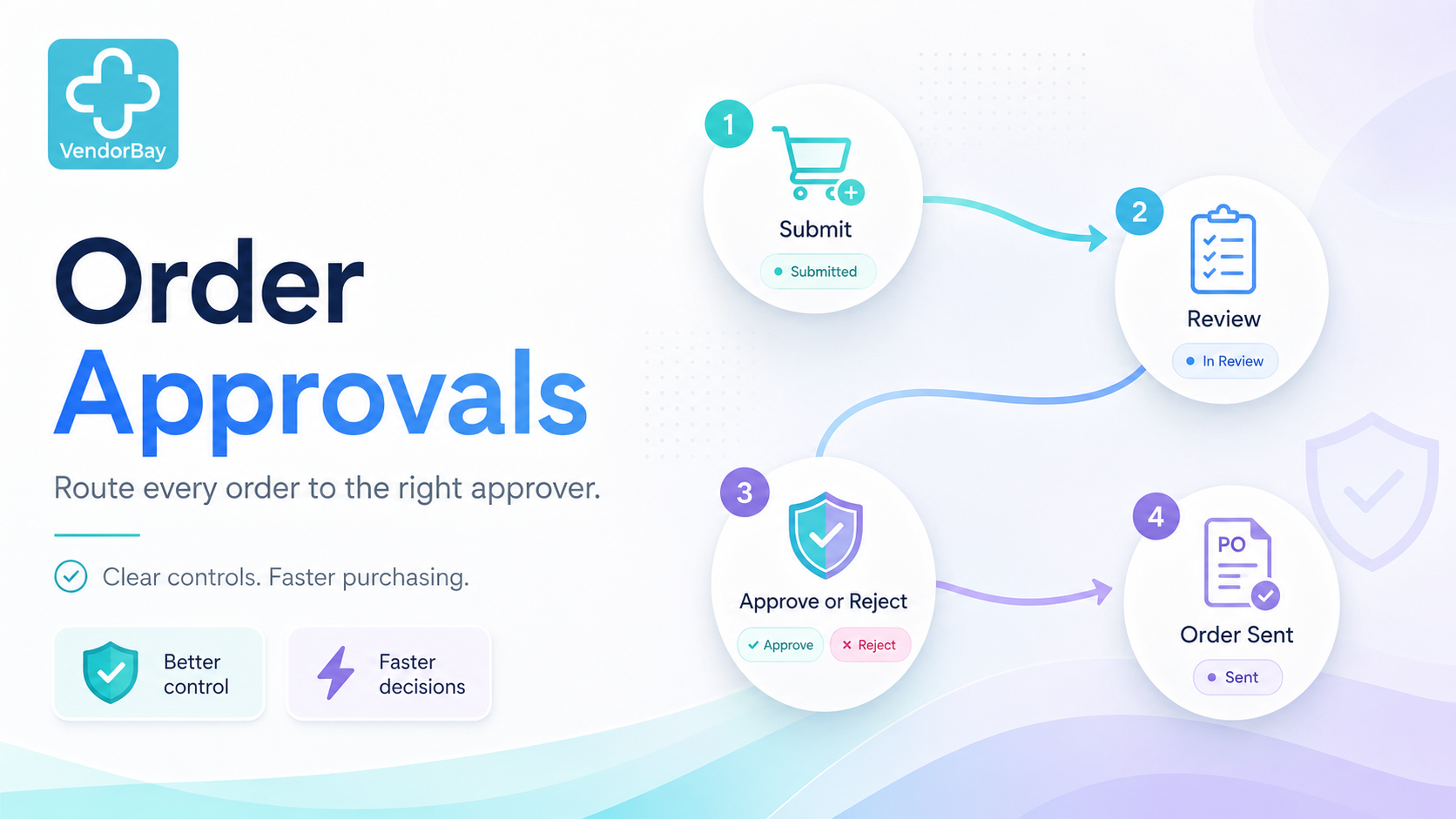
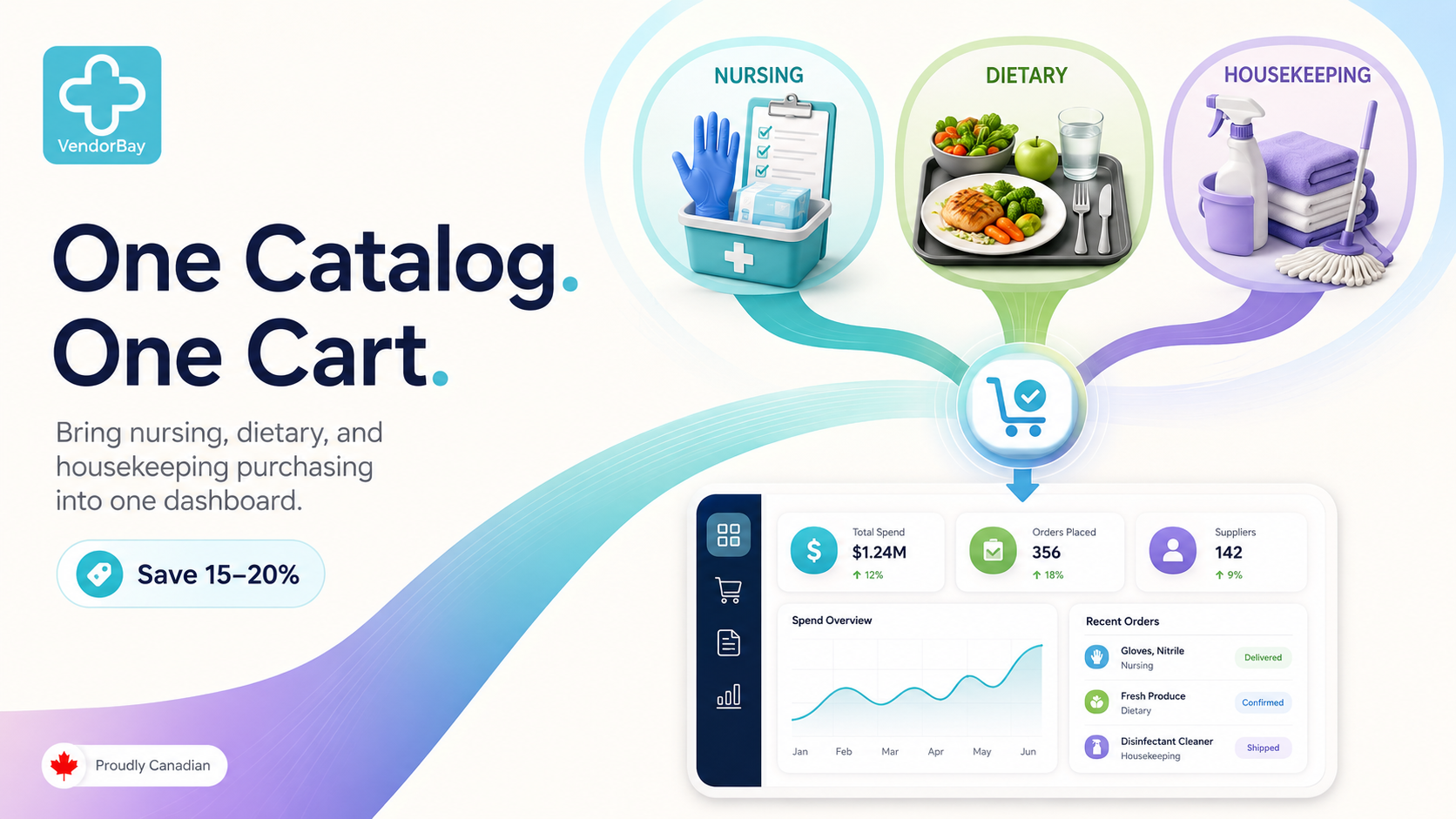
Long-term care purchasing is harder than most people realize because LTC homes don’t buy “supplies” in one bucket. Purchasing happens across Nursing, Dietary, Housekeeping, Maintenance, and Admin—often with different suppliers, different ordering habits, and different substitutions.
Over time, that leads to vendor sprawl (too many portals, too many invoices), inconsistent product choices, emergency orders that drive cost and stress, and limited visibility into spend by department.
When homes improve long-term care purchasing with contracted pricing and a consistent ordering workflow, many can often see ~15–20% savings after shifting repeat items on-contract and reducing off-contract spot buys (results vary by baseline pricing and mix). The operational benefits are immediate: fewer small orders, fewer invoices, and less admin time chasing supplies.
What long-term care purchasing includes (by department)
A typical home buys across:
- Nursing: gloves, wipes, PPE, common consumables
- Housekeeping: disinfectants, liners, paper products, floor care
- Dietary: food, disposables, beverages, smallwares
- Maintenance: light bulbs, batteries, hardware, filters
- Admin: paper, toner, labels, office essentials
The goal isn’t to force every department into one person’s ordering. The goal is to make long-term care purchasing consistent across departments—with visibility and control.
Why long-term care purchasing gets expensive fast
Vendor sprawl + small orders
When each department orders independently, the home often ends up with lots of small orders, duplicate purchases, and higher admin workload from receiving and invoice processing.
Substitutions without standards
If preferred products aren’t clearly defined, staff substitute based on availability. That creates inconsistent infection prevention outcomes, higher unit costs from premium upgrades, and waste from mismatched pack sizes.
Off-contract drift
Without a standard list and contracted equivalents, more purchases end up off-contract at list pricing—making spend harder to predict and manage.
The 4-step long-term care purchasing playbook
Step 1: Build a Top 50 standard list by department
Start with repeat items that drive the majority of purchasing volume:
- Top 15 Nursing items
- Top 15 Housekeeping items
- Top 15 Dietary items
- Top 5 Admin/Maintenance items
This becomes your baseline standard list for long-term care purchasing.
Step 2: Set preferred items + approved alternates
For each item, define a Preferred (default) and an Approved alternate (backup). Keep it to two options to prevent substitution drift.
Step 3: Consolidate ordering cadence
Set a simple schedule so departments aren’t ordering ad hoc: weekly routine order windows, planned replenishment for high-volume categories, and a clear exception process for true emergencies.
Step 4: Move repeat items on-contract first
Map your standard list to contracted equivalents—same product where possible, approved alternates where needed. This is typically where savings show up fastest.
Want help improving long-term care purchasing quickly? Book a 10-minute demo and we’ll run a Top 50 Savings Scan by department using your repeat items (or one invoice).
How VendorBay supports long-term care purchasing
VendorBay helps LTC homes reduce vendor sprawl and standardize ordering across departments:
- Group purchasing pricing across 100+ vendors
- One workflow across Nursing, Dietary, Housekeeping, and Admin categories
- Preferred items + approved alternates to reduce substitutions
- Spend visibility by department and facility
- Cleaner purchasing records (who ordered what, when, and why)
Explore: Long-Term Care Procurement • How VendorBay Works • LTC Ordering Portal
FAQs
Does improving long-term care purchasing require switching vendors? Not necessarily. Many homes start by standardizing repeat items and shifting them on-contract while keeping familiar suppliers.
How quickly can we see impact? Often within 30 days once repeat items move on-contract and small off-contract buys drop. Results vary.
How do we prevent departments from ordering different versions of the same item? Use a shared standard list and preferred items with approved alternates.
Next step: a 10-minute Savings Scan
Book a 10-minute demo and we’ll map your Top 50 repeat items by department to contracted equivalents and show where improvements typically appear for long-term care purchasing.